Poker News
Tuesday, May 12, 2026
open/closeTadas Peckaitis

Tadas Peckaitis has been a professional poker player, coach and author for almost a decade. He is a manager and head coach at mypokercoaching.com where he shares his experience, and poker strategy tips. Tadas plays poker, mostly online, but also manages to play live events while travelling through Europe and the U.S. He is a big fan of personal effectiveness and always trying to do more. Tadas regularly shares his knowledge about both of these topics with his students, and deeply enjoys it. Follow him on Twitter, Facebook and YouTube, or visit www.mypokercoaching.com


open/closeFeatured Authors

Top 10 poker mistakes players don’t realize pros are exploiting
 

Professional poker players can only truly make a living at poker as long as recreational poker players keep playing against them.

For most amateurs, poker is just entertainment they are willing to pay for, and playing with the pros makes the game even more fun.

However, there are some mistakes that recreational poker players make very often, which the pros constantly exploit.

If you happen to be a recreational player yourself, keep reading and learn the top 10 poker mistakes you may be making, but should learn to avoid when playing against professionals.

10. Playing too high
A typical mistake recreational players make that has nothing to do with their card skills is that they play in games they can’t really afford to be in.

Professional poker players make it their job to assess how comfortable a player is in a game, including the financial aspect.

If the pros notice you are not comfortable when facing big bets in a game, they will put you to the test and try their best to steal every pot they can from you.

To avoid this, a recreational player should only ever play in games where the losses don’t hurt much, and where every bet they face is one they can comfortably afford to call off.

One simple way to reduce financial pressure is to take advantage of available poker bonus codes, which can give you extra breathing room when choosing stakes and sessions.

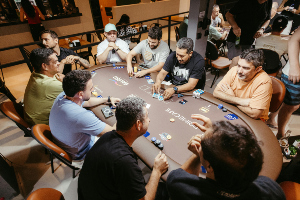
Be careful of falling in love with big hands.

Be careful of falling in love with big hands.

9. Falling in love with big hands
Amateur poker players tend to “get married” to hands like AA and KK, and are often unlikely to fold them regardless of how a hand plays out.

Once they are dealt a big pocket pair, they often call off any number of big bets postflop, even when the board becomes dangerous, and their opponent is very likely to have them beat.

Their logic is that these hands come along so rarely, and they are supposed to win a high percentage of the time, but that logic is flawed. While it is true that pocket Aces will win 80% of the time, they will also not get much value in many scenarios in which they do win.

When dozens or even hundreds of big blinds start going into the pot, a professional player will stop and think about what their opponent is doing, while a rec may simply decide pocket Aces are too good to fold.

8. Acting weak when they’re strong
The famous quote from Rounders says the amateurs “wear their tells like signs around their necks,” and that’s quite true in many cases.

One of the biggest tells that recreational players have is that they will act weak when they have a very strong hand.

For example, after flopping a set and facing a continuation bet, the amateur may look back at his cards, pretend like he’s thinking about folding them, then follow it all up with a big raise. In almost every case, this type of action represents incredible strength, and the pros are well aware of it.

If you are a recreational player who often plays in games with much more experienced players, remember to hide the strength of your hand by simply not communicating in any way. Don’t act strong or weak. Simply take a few seconds to act on your hand every time, then make your decision without any Hollywooding.

Even though you may give something away while trying to remain stoic, keeping your best poker face will definitely perform better than trying to trick your opponents into believing you have a weak hand this time.

7. Chasing draws too much
Chasing draws is a mistake that many recreational poker players simply can’t seem to get away from. Even if they know the odds, the amateurs will often stick around to see “one more card,” regardless of the bet they are facing. Once they recognize this, the pros capitalize by betting bigger with their strong hands, or playing multi-street bluffs that end up winning the maximum when the draws brick out on the river.

A recreational poker player who is looking to win against the pros should be cautious about chasing draws, especially when the odds simply dictate that the draw should be folded.

6. Donk betting
A donk bet is defined as a bet made “out of turn” by a player who played passively before the flop. For example, if you call a raise in the big blind and then bet first on the flop, you are making a donk bet.

Donk betting can be applied in some specific situations and can be very effective in games like Pot Limit Omaha. However, amateurs usually apply this play very poorly. In most cases, an amateur betting into the preflop raiser means they have connected with the board, and they are hoping to force the raiser to fold a hand like AK that’s missed the flop.

Professional players can often recognize the exact intention of a donk bet, judging by its size and board texture, and respond either by folding when they know the player is very strong or by playing aggressively when the player has a marginal hand they are trying to protect.

5. The limp re-raise
Another amateurish strategy that ties in with open limping is the limp re-raise. Once recreational players realize they are limping too much and being isolated by the pros, they start limping some strong hands to “balance their limping range.”

Once another player puts in a raise, they go for a big re-raise with their strongest hands, believing they have trapped their opponents.

The limp re-raise could make some sense if it were done with a truly balanced range. However, most amateurs only limp-raise hands like Aces and Kings, which are very rare and hard to get. On the other hand, they limp hundreds of other combinations of cards that are not strong enough to re-raise with.

In practice, this means their opponents can easily fold preflop whenever they face a limp raise, as it almost always signifies one of the top hands in the game.

Instead of limping and re-raising with your Aces, try opening for a standard raise size, and watch your opponents play back at you, make the pot bigger, and actually give you a chance to trap them.

4. Limping
One of the first plays every recreational player makes at a poker table is a limp. They are taught they have to at least call the big blind in order to see the flop, and they do just that with various hands they would like to see the flop with.

However, limping is an extremely ineffective poker strategy. It is not aggressive, it does not define ranges, and it keeps the pot small. What’s even more, it allows your opponents to pounce on you.

While limping can make sense in some cases as part of a greater poker strategy, random limping with speculative hands in various positions simply doesn’t work. The pros notice the players who limp often, isolate them with wide ranges, and easily outplay them postflop because the skill edge is simply too great.

3. The oversized raise
The oversized preflop raise is one of the most amateurish mistakes some recreational players still make, even after years of playing poker.

This play involves raising bigger when they have a strong hand, while keeping their raises closer to the standard opening size with all other hands. For example, a player may normally open to 3x in a live cash game but make a massive 10x or 15x raise with a hand like AA or KK.

Amateurs go for the oversized raise because they want to “protect” their hand, remembering that one time when someone called their raise with connectors and made a straight. While this play does technically protect their hand from such scenarios, it also wastes a ton of value, as professional players easily recognize it as strong and can fold even very strong hands.

In fact, when playing against certain recreationals, the pros may even fold a hand as strong as AK when facing a big raise like this, which is an absolute disaster for the raiser.

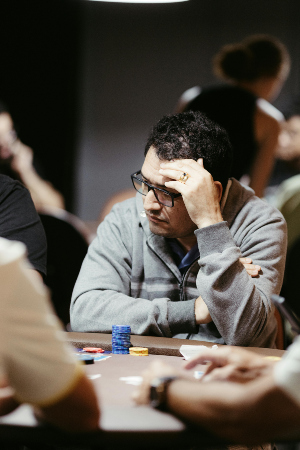
Playing out of position can lead to trouble.

Playing out of position can lead to trouble.

2. Playing out of position
Playing too many hands and playing out of position too often go hand in hand. Since amateurs limp 70% of their hands, they often end up calling the isolation raise against an in-position player, going to the flop with inferior cards and a positional disadvantage.

When the pro gets heads-up with the amateur, and they have position, the rest of the hand usually turns into a proper nightmare for the amateur.

The pros have a better understanding of ranges, bet sizing, and board textures, and their positional advantage allows them to capitalize on these to the fullest.

Instead of limping and calling a bunch of raises in early positions, the amateur would do well to play tight and only enter the pot from early position with strong cards, many of which can go for a 4-bet if they face resistance preflop.

1. Playing too many hands
Perhaps the biggest mistake amateur poker players make is that they play too many hands before the flop.

When we say too many, we don’t just mean a few too many. Instead, many play as many as 70% of all hands in spots where they should play 20%, which is a strategic mistake that cannot be compensated for. Even the best poker players in the world can hardly get away with playing such wide ranges, and amateur players who have very little postflop skills are basically drawing dead if they play so wide.

Amateurs looking to survive against pros should play both tight and aggressively, reducing their opponents’ chances of exploiting them and capitalizing on their mistakes.

Back to News

open/closeExpert Poker Strategy

open/closeTop Poker Columns

PokerZone is owned by Casino City, an independent directory and information service not affiliated with any casino. Warning: You must ensure you meet all age and other regulatory requirements before entering a casino or placing a wager. There are hundreds of jurisdictions in the world with Internet access and hundreds of different games and gambling opportunities available on the Internet. Do not assume that Internet gaming sites are in compliance with the rules and regulations of every jurisdiction from which they accept players. YOU are responsible for determining if it is legal for YOU to play any particular game or place any particular wager under the laws of the jurisdiction where you are located.